LipoDyne Official Website › Blog › Why No Daily Value
Why A Supplement Panel Prints A Dagger Instead Of A Percentage
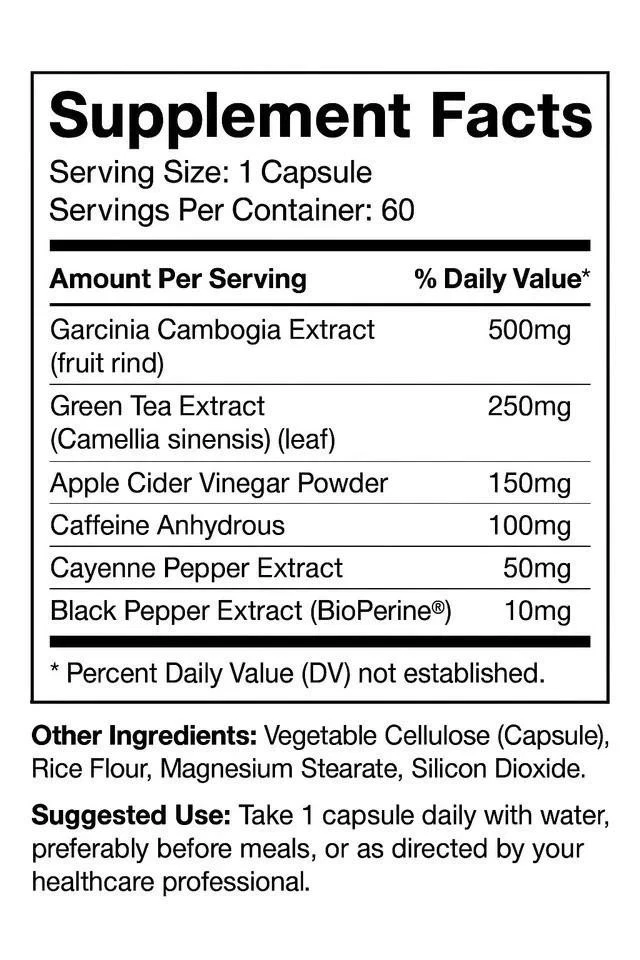
Six rows on this bottle carry a small dagger where a percentage would go, and a footnote underneath explaining it. It is one of the most misread marks in the aisle, and what it actually means is narrower and less alarming than it looks.
- A Percent Daily Value compares a serving against an established daily reference amount for a nutrient.
- Botanical extracts are not nutrients and have no daily reference amount, so no percentage can be calculated for them.
- The dagger is the standard way a panel says so, and the footnote under the panel is its explanation.
- It is not a warning, not a sign of a low dose and not a sign that anything has been withheld.
- The absolute milligram figure is still there, and it is the number that matters for comparing a label against a trial.
What a Percent Daily Value is
It is a ratio. The amount in one serving, divided by an established daily reference amount for that nutrient, expressed as a percentage.
The reference amounts exist because certain nutrients have requirements. A body needs some vitamin C, some calcium, some iron, and public health bodies have set figures for how much. A panel printing 90 per cent beside vitamin C is telling you that one serving covers most of a day’s reference amount.
That is genuinely useful information and it is why the column exists. It lets somebody compare two products without knowing anything about milligrams, and it flags a serving that is unusually large against the benchmark.
The NIH Office of Dietary Supplements publishes the plainest consumer explanation of the framework, and the FDA’s own questions and answers cover what a supplement label is and is not required to carry.
The two kinds of row on a Supplement Facts panel
Once you see the division, every panel in the aisle becomes easier to read.
Some ingredients are nutrients with reference intakes. They get a percentage. Everything else does not, because there is no denominator to divide by.
A botanical extract is the clearest case. There is no daily requirement for garcinia cambogia. Nobody becomes deficient in green tea. The question a percentage answers simply does not apply, so the panel prints a symbol that says so and explains it underneath.
| Kind of row | Carries a %DV? | Example | What the percentage would tell you |
|---|---|---|---|
| Vitamins and minerals with a reference intake | Yes | Vitamin C, magnesium, zinc | How this serving compares with the daily reference amount for that nutrient. |
| Nutrients with no established reference intake | No, a dagger | Choline in some formats, certain amino acids | Nothing, because no reference amount has been set. |
| Botanical extracts | No, a dagger | Garcinia, green tea, cayenne, black pepper | Nothing. Plants are not nutrients and have no daily requirement. |
| Isolated compounds that are not nutrients | No, a dagger | Caffeine anhydrous | Nothing, though the amount itself is exact and needs no conversion. |
Four kinds of row and the one that carries a percentage. Every row on this panel falls into the bottom three.
Why the symbol rather than a blank
A blank cell is ambiguous. It could mean no percentage applies, or it could mean somebody left the cell empty. A dagger with a footnote is an explicit statement, and it is the convention because explicitness is what a declaration is for.
Why all six rows here carry a dagger
Because all six are botanical extracts or isolated non-nutrient compounds. There is not a vitamin or a mineral among them.
Garcinia cambogia fruit rind extract, green tea leaf extract, apple cider vinegar powder, cayenne pepper extract and black pepper extract are plant materials. Caffeine anhydrous is a pure compound and still not a nutrient. None of the six has a daily reference amount, so none of the six can carry a percentage.
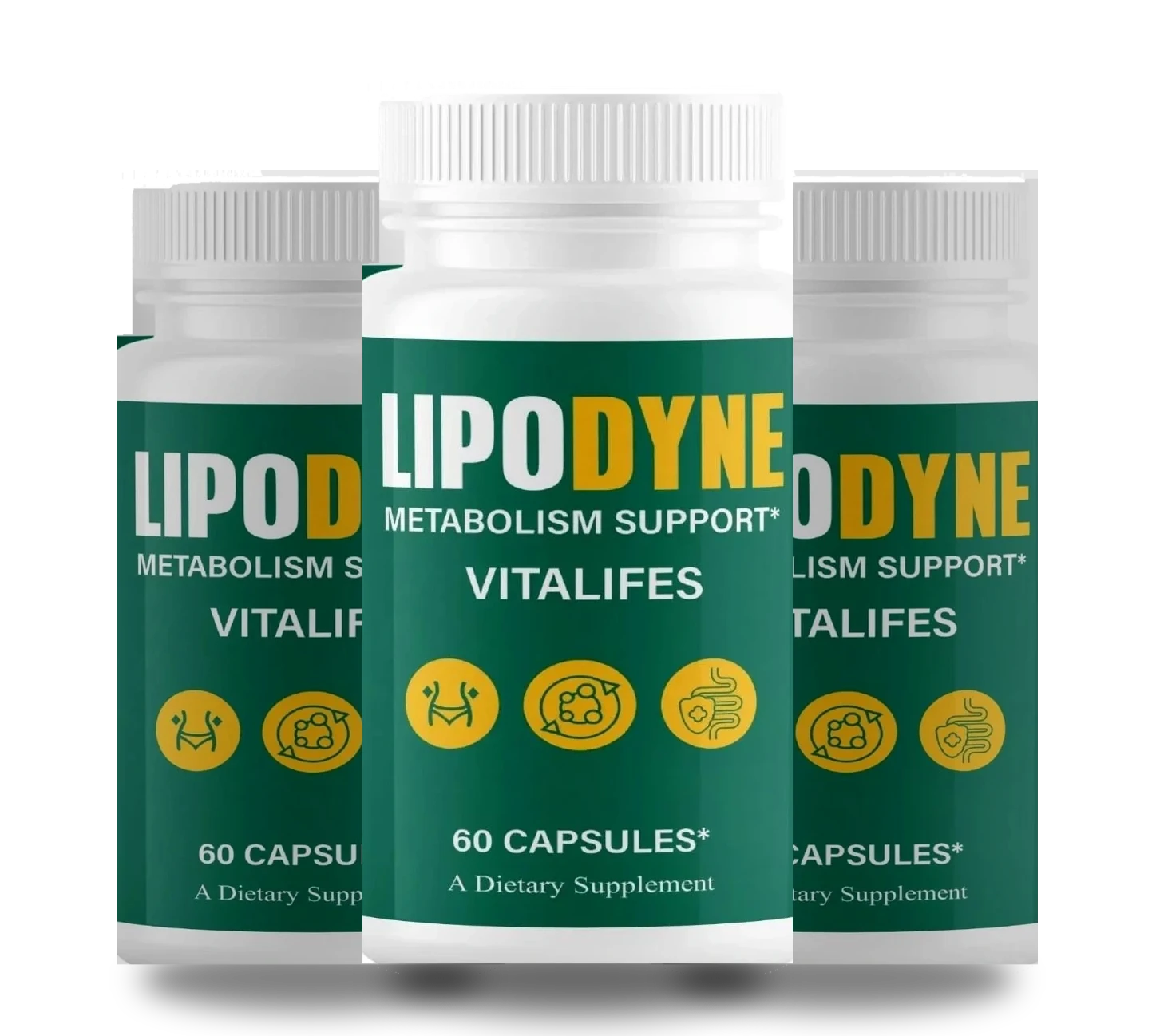
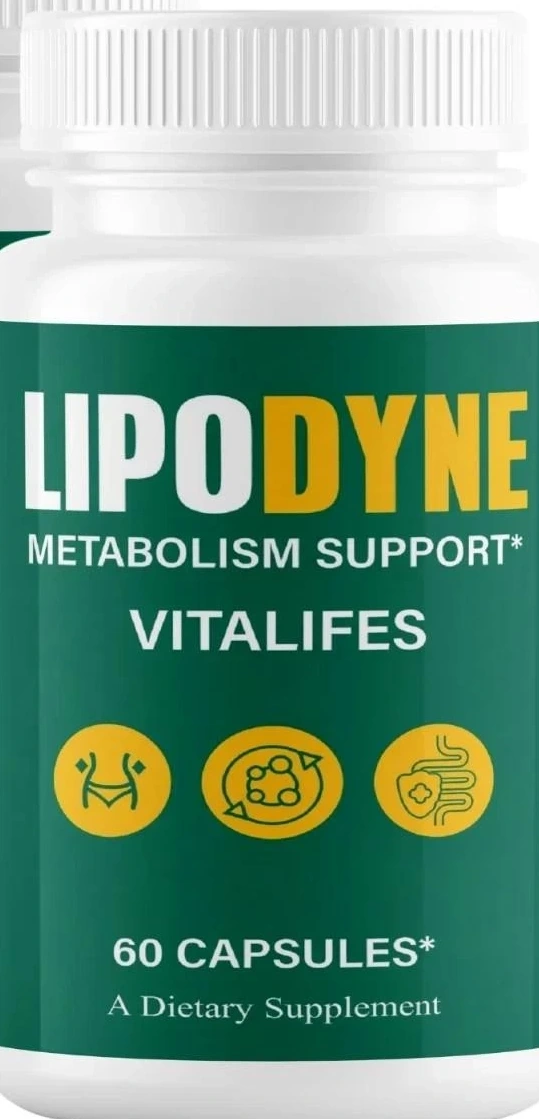
That is worth stating because one line on the seller’s marketing artwork for this product names vitamins and minerals. The panel is the authority on what is in the bottle, and the panel contains neither. The dagger column is, incidentally, one more way of seeing that: a panel with vitamins on it would have percentages on it.
† marks a row for which no Percent Daily Value has been established. That is the panel’s own footnote, and it applies to all six rows.
What the dagger is not saying
Four misreadings, in rough order of how often they turn up.
- It is not a warning. No regulator has flagged anything. It is an absence of a benchmark, not the presence of a concern.
- It does not mean the dose is small. The largest row on this panel is 500 mg and it carries the same dagger as the 10 mg row. The symbol says nothing about size.
- It does not mean something has been withheld. The amount is printed. A proprietary blend withholds; a dagger explains.
- It does not mean the ingredient is unstudied. Several of these rows have decades of human trials behind them. Trials and reference intakes are unrelated things.
The genuine limitation is a different one, and it is worth keeping separate from the dagger entirely. Five of the six rows here are extract weights with no standardisation percentage, which means the amount cannot be converted into a dose of the compound the research counted. That is a real gap, it is covered on the ingredients page, and it has nothing to do with the Daily Value column.
What is still usable on a dagger row
Almost everything, which is the point this article is building towards.
| What the dagger removes | What remains usable | How to use it |
|---|---|---|
| A comparison against a daily reference amount | The absolute amount in milligrams | Set it beside the amount the published trials used for that ingredient. |
| An at-a-glance sense of whether a serving is large | The serving arithmetic | Multiply by servings per day to get the daily figure, which is what trials report. |
| A regulatory benchmark | The order of the rows | A Supplement Facts panel lists actives by weight, so the first row is the largest. |
| Nothing about safety either way | The label caution and the total | Add the six amounts. On this panel they come to 1,060 mg a capsule. |
A dagger removes one specific comparison and leaves the rest of the panel entirely readable.
The second row of that table is where most of the value sits. A trial reports a daily dose. A panel reports a per-serving amount. Multiplying one by the servings per day is the whole conversion, and on this bottle it is trivial: one capsule is one serving, so the per-capsule figure is the daily figure.
That is unusually simple. A great many products in this category are taken twice a day, which means the panel figure has to be doubled before it can be compared with anything, and a reader who forgets is out by a factor of two.
The row that needs no reference intake at all
Caffeine anhydrous, at 100 mg, is the one row on this panel that is fully legible.
It carries a dagger like the others, because caffeine is not a nutrient and has no daily reference amount. But the amount itself needs no conversion: caffeine anhydrous is caffeine, so 100 mg of it is 100 mg of the compound the research measured.
That makes it comparable to anything. 100 mg is roughly a cup of coffee. The commonly cited ceiling for healthy adults is 400 mg a day, proposed in a review rather than set as a regulation. A reader can place this capsule inside their own day without any further information.
The one complication is not the dagger’s fault either. Green tea extract carries caffeine of its own, in an amount that varies considerably across commercial extracts, and this panel totals neither. So the per-capsule caffeine figure is above 100 mg by an amount the label does not state.
The LipoDyne panel, printed in full
Six rows with every amount, the dagger footnote as the label states it, and the servings arithmetic worked out. Nothing on that page is inferred.
One, three and six-bottle packs · price at checkout · money-back guarantee as printed on the listing
Order LipoDyne On The Official WebsiteOne capsule a day · 60 per bottle · lot LIP-26/LI-7268
Reading any panel’s footnote
The footnote under a Supplement Facts panel is usually the least-read sentence on a bottle and often the most informative.
It explains the symbols. It sometimes names which reference intake the percentages were calculated against. And on a panel with a proprietary blend, it is frequently where the blend is described, which makes it the only place a reader can find out what has not been disclosed.
General guidance on using supplements sensibly makes the same point in a different form: the small print on a supplement label is where the information density is, and the front of the bottle is where the persuasion is.
- Find the footnote. It is directly beneath the panel, in the smallest type on the bottle.
- Match every symbol in the panel to its explanation.
- Check whether a blend is described there rather than in the panel itself.
- Read the serving size once more, because everything above depends on it.
The habit worth building
A dagger is a signal that you are holding a botanical product rather than a nutritional one, and the questions worth asking are different for the two.
For a vitamin, the percentage answers the main question: is this a sensible amount against what a body needs? For a botanical, no such question exists, and the useful comparison is against what the trials gave rather than against a reference intake.
So the habit is: see a dagger, stop looking for a percentage, and start looking for a standardisation figure instead. That is the number that decides whether a botanical row can be compared with anything at all, and it is missing far more often than the dagger is misread.
A dagger means no daily reference amount exists for that ingredient. It says nothing about dose, safety, quality or evidence, and the number beside it is still the most useful thing on the row.
References
- Questions and Answers on Dietary Supplements. U.S. Food and Drug Administration. https://www.fda.gov/food/information-consumers-using-dietary-supplements/questions-and-answers-dietary-supplements
- Dietary Supplements: What You Need to Know. Office of Dietary Supplements, National Institutes of Health. https://ods.od.nih.gov/factsheets/WYNTK-Consumer/
- Using Dietary Supplements Wisely. National Center for Complementary and Integrative Health, National Institutes of Health. https://www.nccih.nih.gov/health/using-dietary-supplements-wisely
- Seeram NP, Henning SM, Niu Y, et al. Catechin and caffeine content of green tea dietary supplements and correlation with antioxidant capacity. J Agric Food Chem. 2006;54(5):1599-603. PMID 16506807. https://pubmed.ncbi.nlm.nih.gov/16506807/
- Nawrot P, Jordan S, Eastwood J, et al. Effects of caffeine on human health. Food Addit Contam. 2003;20(1):1-30. PMID 12519715. https://pubmed.ncbi.nlm.nih.gov/12519715/
- Geller AI, Shehab N, Weidle NJ, et al. Emergency department visits for adverse events related to dietary supplements. N Engl J Med. 2015;373(16):1531-40. PMID 26465986. https://pubmed.ncbi.nlm.nih.gov/26465986/