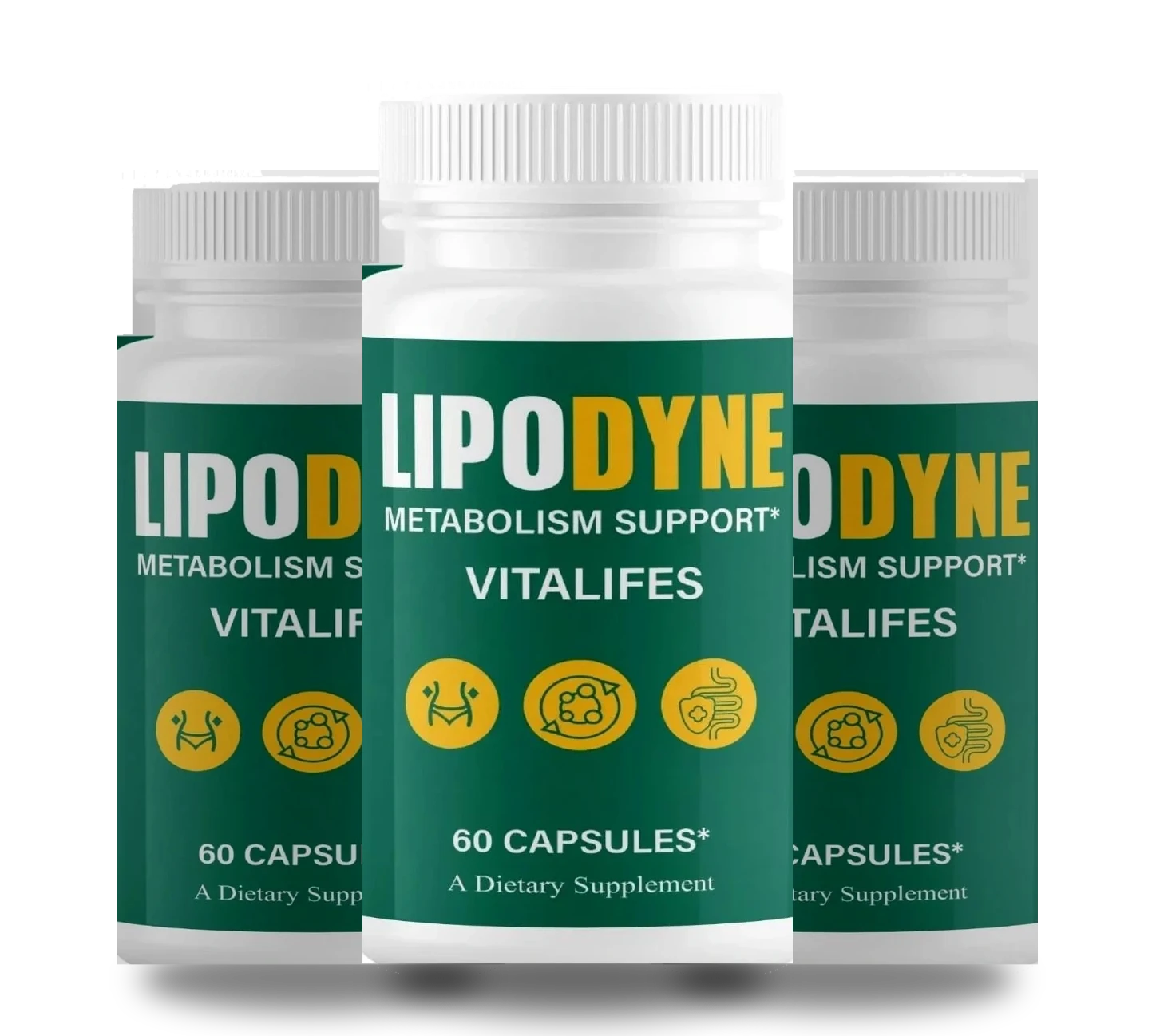
LipoDyne Official Website › Blog › Piperine And Your Prescription
Piperine, Ten Milligrams, And Your Prescription
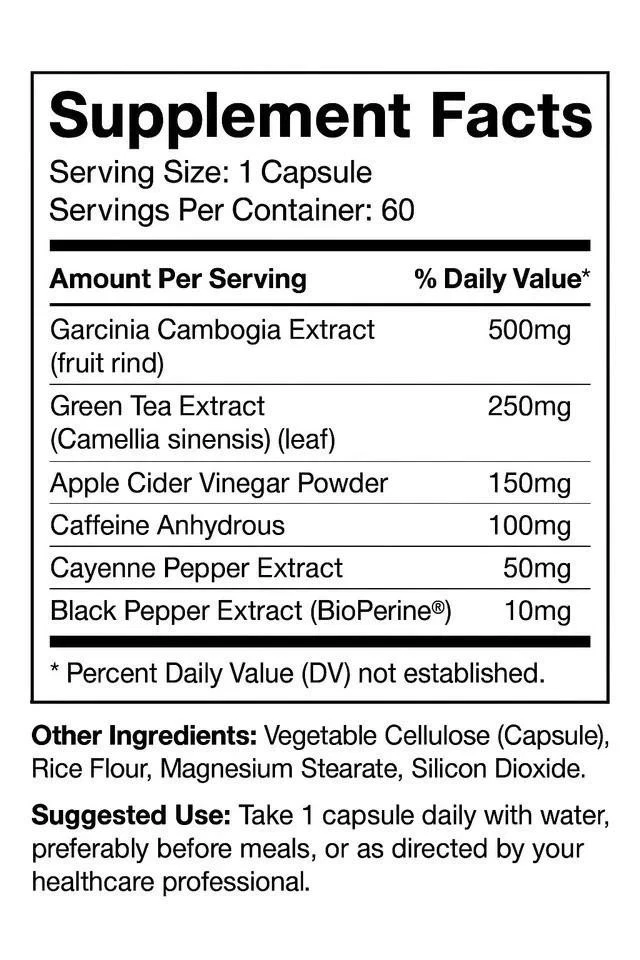
The smallest row on this panel is the one worth reading first if you take anything prescribed. Black pepper extract is not on a formula to do anything to metabolism. It is there to change how much of something else gets absorbed, and it does not discriminate about what.
- Piperine is the pungent compound in black pepper and the active fraction of the branded extract on this panel.
- It raises the absorption of certain co-administered compounds, which is why formulators include it.
- It is also a mechanism-based inactivator of CYP3A, the enzyme system that clears a large share of common prescriptions.
- This panel prints 10 mg of extract, with no piperine figure. The landmark absorption study used 20 mg of piperine itself.
- If you take anything prescribed, this is the row to mention, and one sentence covers it.
What BioPerine is
BioPerine is a branded black pepper fruit extract standardised for piperine, the compound responsible for the pepper’s pungency. It appears on a very large number of supplement panels, usually at five to twenty milligrams, and usually as the last row.
Its job on a formula is not to act on the thing the formula is sold for. It is a bioenhancer: an ingredient added to improve how much of the other ingredients reaches the bloodstream.
That is a legitimate and useful thing to do, particularly on a panel of botanical extracts, several of which are poorly absorbed on their own. A formulator adding piperine is trying to make the rest of the capsule work harder, and the reasoning is sound.
| What piperine does | How well established | Why it matters here |
|---|---|---|
| Raises absorption of certain co-administered compounds | Well documented, with a landmark human study behind it. | It is the reason the row is on a formula at all. |
| Inhibits CYP3A activity | Documented as mechanism-based inactivation. | CYP3A clears a large share of commonly prescribed medicines. |
| Affects intestinal permeability | Described in the mechanistic literature. | Part of how the absorption effect is thought to work. |
| Changes metabolism directly | Not established at these amounts. | This row is a carrier, not a thermogenic ingredient. |
Four statements about the same compound, sorted by how well each is supported.
The study that made piperine famous
The landmark human study gave volunteers a poorly absorbed compound with and without 20 mg of piperine, and measured what reached the bloodstream. The difference was large.
That result is the reason piperine is on shelves at all. It demonstrated, in people rather than in glassware, that a small amount of one compound could substantially change the bioavailability of another taken alongside it.
Mechanistic work on intestinal permeability fills in part of how, describing effects at the level of the gut wall that are consistent with the absorption finding.
Two details about that study are worth carrying forward. It used 20 mg of piperine itself, not 20 mg of an extract containing piperine. And it was a study of a specific pairing, which is a narrower claim than a general absorption enhancer.
What CYP3A does, in plain terms
CYP3A is a family of enzymes, mostly in the liver and the gut wall, whose job is to chemically modify substances so the body can clear them.
It is the most important single route for clearing medicines. A very large share of drugs in common use are CYP3A substrates, which means the dose a prescriber chooses is calibrated against how quickly that enzyme removes them.
The practical consequence follows directly. Slow the enzyme down and the drug is cleared more slowly, so more of it stays in the blood for longer, so the effective dose rises without anybody changing what was swallowed.
This is the same mechanism behind the grapefruit warnings on certain prescriptions, which is a familiar example of an ordinary food doing something consequential to medicine clearance.
Why this belongs on a supplement page
Because the interaction runs in the direction people do not expect. A supplement is usually assumed to be something the body deals with independently of a prescription. A CYP3A inhibitor is not that: it changes what the prescription does.
Why mechanism-based inactivation matters
Piperine is characterised as a mechanism-based inactivator of CYP3A, and the word mechanism-based is doing real work in that phrase.
A reversible inhibitor occupies an enzyme and then lets go. Stop taking it and the enzyme is available again within its normal turnover.
Mechanism-based inactivation is different. The enzyme is disabled in a way that requires the body to make new enzyme rather than simply to clear the inhibitor. The effect therefore outlasts the compound, and it accumulates with regular daily dosing rather than resetting between doses.
A once-daily capsule taken for two months is exactly the pattern in which that distinction matters most.
Reading the 10 mg row on this bottle
| What the panel prints | What the research used | The gap |
|---|---|---|
| Black Pepper Extract (BioPerine) | Piperine, the isolated compound | A branded extract rather than the compound, with no piperine figure printed. |
| 10 mg per capsule | 20 mg of piperine in the classic absorption study | Half, before the extract-to-compound conversion is even considered. |
| One row of six on a metabolism panel | Co-administered with a specific poorly absorbed compound | The research is about a pairing, not about a six-ingredient capsule. |
| No interaction wording on the panel | A documented mechanism-based effect on a major clearance enzyme | The single most consequential thing about this row is not on the label. |
The left column is read off the label. The middle column is what the published work used, and it is not a prediction about this capsule.
Two honest observations follow from that table, and they point in opposite directions.
The first is that 10 mg of extract is a small amount and carries an unstated quantity of piperine below that. Whatever the interaction risk is, it is not the risk of a concentrated piperine supplement.
The second is that the risk is not zero and the label says nothing about it. This panel carries the label caution and no interaction wording, so a reader who does not know what piperine is has no way to find out from the bottle.
That is why this website names the interaction in a sentence rather than hedging it across twenty. The gap is not in the dose; it is in what the label tells you about the dose.
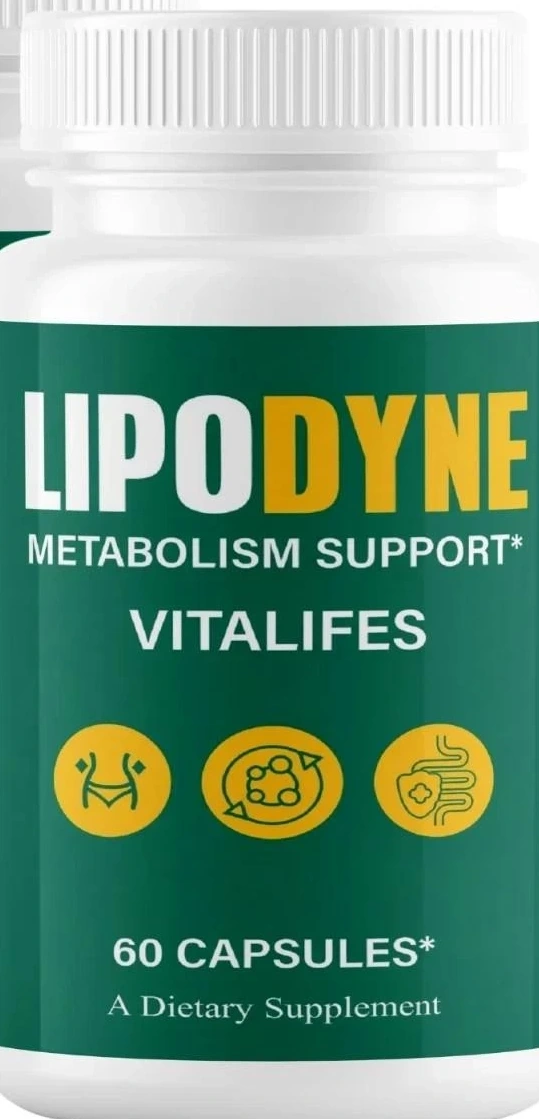
Read the whole LipoDyne panel before you decide
Six rows, every amount printed, and the safety page naming the one interaction in plain words rather than burying it under general caution.
One, three and six-bottle packs · price at checkout · money-back guarantee as printed on the listing
Order LipoDyne On The Official WebsiteOne capsule a day · 60 per bottle · lot LIP-26/LI-7268
Who should raise this, and who need not
- Anybody taking a prescribed medicine should mention it. That is the whole of the rule, and it takes one sentence.
- Anybody on a medicine with a narrow margin between an effective dose and a problematic one has the strongest reason to. Those are the prescriptions where a clearance change shows up first.
- Anybody already avoiding grapefruit on medical instruction is being told about the same enzyme, which makes the connection easy to explain.
- Anybody taking nothing prescribed has very little to weigh here. Black pepper is food, and 10 mg of extract is a culinary quantity.
The compound in question is in a spice rack in every kitchen. The point is not that piperine is dangerous; it is that a concentrated daily dose of it alongside a prescription is a specific, documented, easily raised question.
The sentence to take to a prescriber
Copy this, or something close to it:
“I am thinking of taking a supplement that contains 10 mg of black pepper extract standardised for piperine, once a day. Piperine inhibits CYP3A. Is that an issue with anything I am on?”
That sentence contains everything needed: the compound, the amount, the frequency and the enzyme. It takes fifteen seconds to ask and it replaces every vague caution this article could otherwise have printed.
The same page carries the other figure worth mentioning, which is the caffeine. Plain consumer information on caffeine covers that side, and general guidance on using supplements sensibly makes the broader point that telling a prescriber what you take is the single most useful habit in this area.
What this row is not being accused of
- It is not a filler. Piperine has a clear purpose on a botanical panel and a real study behind it.
- It is not present at an alarming amount. 10 mg of extract is small, and the piperine inside it is smaller still.
- It is not unique to this product. The same row appears on a very large share of supplements across every category.
- It is not the reason to avoid this capsule. The reason to raise it is that it is easy to raise and impossible to raise if nobody told you it was there.
The honest summary is that this is the most consequential small row in the aisle, and that almost nothing selling it says so. Data on supplement-related emergency visits describes a category in which interactions are a real and under-reported contributor, and a single sentence to a prescriber removes this one from the list entirely.
References
- Shoba G, Joy D, Joseph T, et al. Influence of piperine on the pharmacokinetics of curcumin in animals and human volunteers. Planta Med. 1998;64(4):353-6. PMID 9619120. https://pubmed.ncbi.nlm.nih.gov/9619120/
- Cui T, Wang Q, Tian X, et al. Piperine is a mechanism-based inactivator of CYP3A. Drug Metab Dispos. 2020;48(2):123-134. PMID 31748224. https://pubmed.ncbi.nlm.nih.gov/31748224/
- Yu D, Kan Z, Shan F, et al. Triple strategies to improve oral bioavailability by fabricating coamorphous forms of ursolic acid with piperine: enhancing water-solubility, permeability, and inhibiting cytochrome P450 isozymes. Mol Pharm. 2020;17(12):4443-4462. PMID 32926628. https://pubmed.ncbi.nlm.nih.gov/32926628/
- Geller AI, Shehab N, Weidle NJ, et al. Emergency department visits for adverse events related to dietary supplements. N Engl J Med. 2015;373(16):1531-40. PMID 26465986. https://pubmed.ncbi.nlm.nih.gov/26465986/
- Using Dietary Supplements Wisely. National Center for Complementary and Integrative Health, National Institutes of Health. https://www.nccih.nih.gov/health/using-dietary-supplements-wisely
- Caffeine. MedlinePlus, U.S. National Library of Medicine. https://medlineplus.gov/caffeine.html