LipoDyne Official Website › Blog › Cayenne And Capsaicinoids
Fifty Milligrams Of Cayenne, And The Number That Is Missing
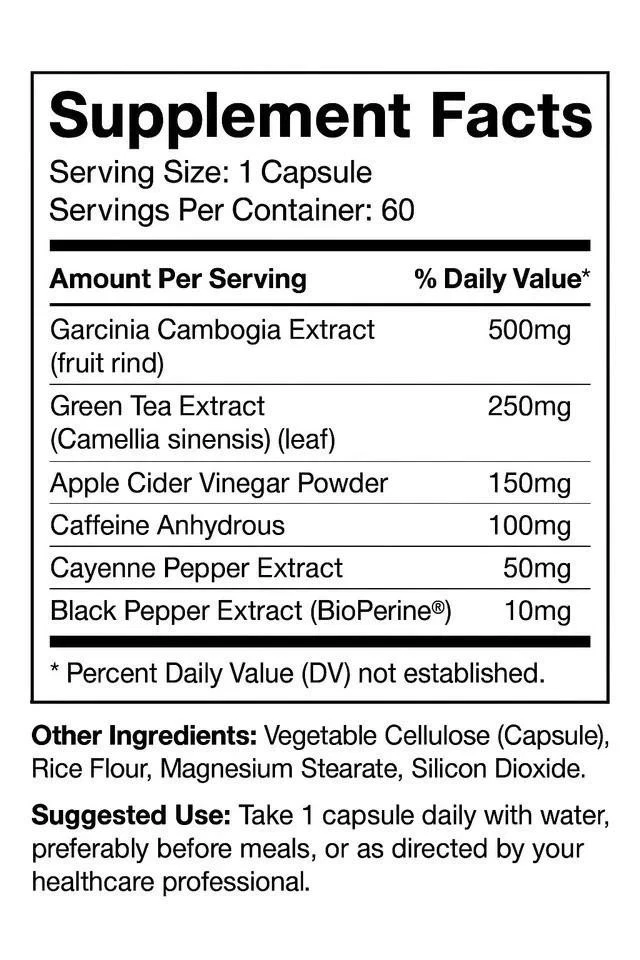
The cayenne row on this panel is the fifth of six and the second smallest. Its research is unusually specific about how much is needed, which makes the one figure the label does not print unusually easy to notice.
- Capsaicinoids are the pungent fraction of chilli and the part every trial measures.
- The pooled effect on resting metabolic rate is roughly 34 kcal a day.
- A published analysis puts 2 mg of capsaicinoids as the minimum for any effect on energy intake.
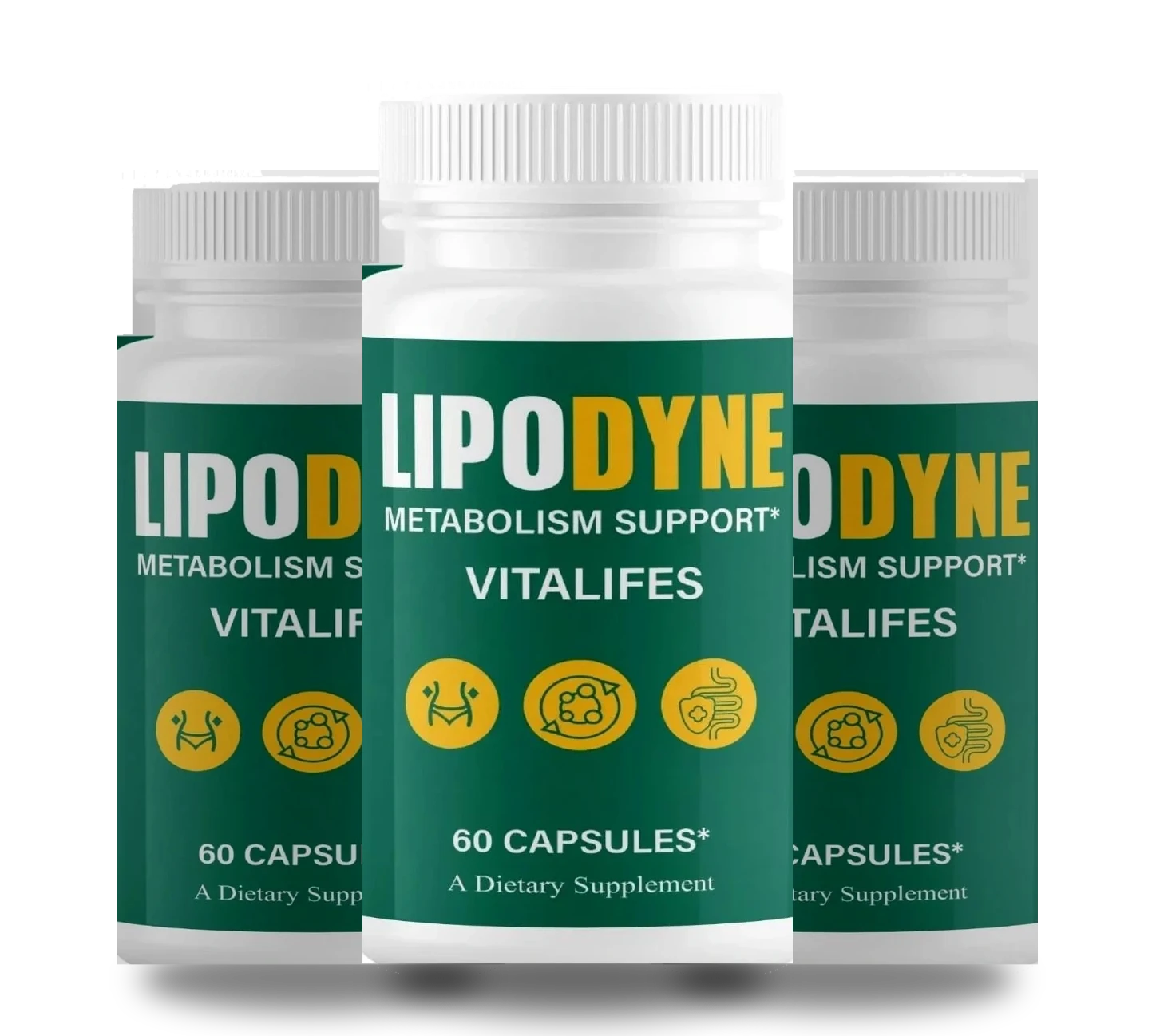
- This panel prints 50 mg of cayenne EXTRACT and no capsaicinoid percentage.
- Depending on standardisation, 50 mg of extract could supply anywhere from a fraction of a milligram to several milligrams of capsaicinoids.
What capsaicinoids are
Capsaicinoids are the family of compounds that make a chilli hot. Capsaicin is the best-known member and dihydrocapsaicin the second, and together they account for most of the pungency and most of the biological activity of the fruit.
They act on a receptor involved in sensing heat, which is why a chilli feels hot rather than merely tasting of something. The same activation is the proposed route to everything else attributed to them: a small rise in energy expenditure, a small effect on appetite, and effects on fat oxidation.
A review of the area sets out the mechanisms and the evidence together, and the honest summary is that the direction is consistent across studies and the magnitude is small.
Why the research counts them rather than the pepper
Because chilli varieties differ by orders of magnitude in pungency, and an extract can be concentrated to almost any strength. A gram of one cayenne preparation and a gram of another are not comparable quantities of anything.
So the literature works in milligrams of capsaicinoids, which is a fixed quantity of a defined set of compounds. Every trial worth reading in this area reports that number.
Where the thirty-four calorie figure comes from
A meta-analysis of capsaicinoid supplementation and resting metabolic rate pooled the randomised evidence and arrived at an increase of roughly 34 kcal a day.
That is a real result from real trials and it is worth holding at its actual size. Thirty-four calories is about a third of an apple. Over a week it is a little under 250 calories, and over a month it is about the energy in a single large meal.
It is also measured under controlled conditions with instruments attached to people. In an ordinary week, where intake varies by hundreds of calories from one day to the next, an effect of that size is not detectable by anybody without a laboratory.
Broader pooled work on obesity outcomes is consistent with that: small, directionally positive, and nowhere near the scale that chilli-based marketing implies.
The 2 mg threshold, and why it exists
A dose analysis of the appetite literature identified approximately 2 mg of capsaicinoids as the minimum daily amount below which no effect on energy intake was observed. Work on energy intake specifically sits behind that figure.
A published minimum is an unusually helpful thing for a reader. Most ingredients in this category have a range of doses across a scattered literature and no clear floor. Here there is a number, and it converts a vague question into an arithmetic one.
The question becomes: does this capsule deliver 2 mg of capsaicinoids? And on this label that question cannot be answered.
| The number | What it is | Where it comes from |
|---|---|---|
| About 34 kcal a day | The pooled effect of capsaicinoid supplementation on resting metabolic rate. | A meta-analysis of the randomised trials that measured it. |
| 2 mg of capsaicinoids | The published minimum below which no effect on energy intake is expected. | A dose-finding analysis of the appetite literature. |
| 50 mg | The amount of cayenne pepper EXTRACT printed on this panel. | The label itself. |
| Not printed | The percentage of that extract which is capsaicinoids. | Absent from this label, as it is from most in the category. |
Three of those four numbers are published. The fourth is the one that would connect them, and it is the one nobody prints.
What 50 mg of extract could actually contain
Cayenne extracts in commerce are standardised anywhere from a fraction of a per cent to ten per cent capsaicinoids and beyond. The arithmetic below is simply 50 mg multiplied by each of those, and the spread is the point.
| If the extract were standardised to | 50 mg would supply | Against the 2 mg threshold |
|---|---|---|
| 0.1% capsaicinoids | 0.05 mg | Forty times below it. |
| 0.5% capsaicinoids | 0.25 mg | Eight times below it. |
| 2% capsaicinoids | 1 mg | Half of it. |
| 4% capsaicinoids | 2 mg | Exactly at it. |
| 10% capsaicinoids | 5 mg | Comfortably above it. |
Arithmetic on the printed 50 mg at five plausible standardisations. This desk does not know which one applies, because the label does not say.
Five plausible standardisations, and the answer flips from forty times below the published threshold to comfortably above it. Nothing on the bottle narrows that range.
This is the clearest single illustration of why an extract weight without a percentage is not a dose. The 50 mg is a true statement about how much material is in the capsule. It is not a statement about how much of the active fraction is in the capsule, and for this particular ingredient the literature has told us exactly which number it needed.
Why the percentage is not printed
Three ordinary reasons, none of which requires anybody to be hiding anything.
Labels are not required to state standardisation. A panel must declare the ingredient and the amount, and the fraction of a defined marker compound is additional information a manufacturer may choose to print.
Standardised material costs more. An extract guaranteed to a percentage has been assayed and adjusted, and both are expenses that a product competing on price may skip.
And a manufacturer that does not standardise cannot print a figure honestly. A range would be truthful and unflattering, and a single number would be a claim that could not be met batch to batch.
This is the fairest criticism of this label and it applies to five of its six rows. The amounts are printed, which is better than a blend total, and what is inside the amounts cannot be worked out. Both halves of that sentence are true.
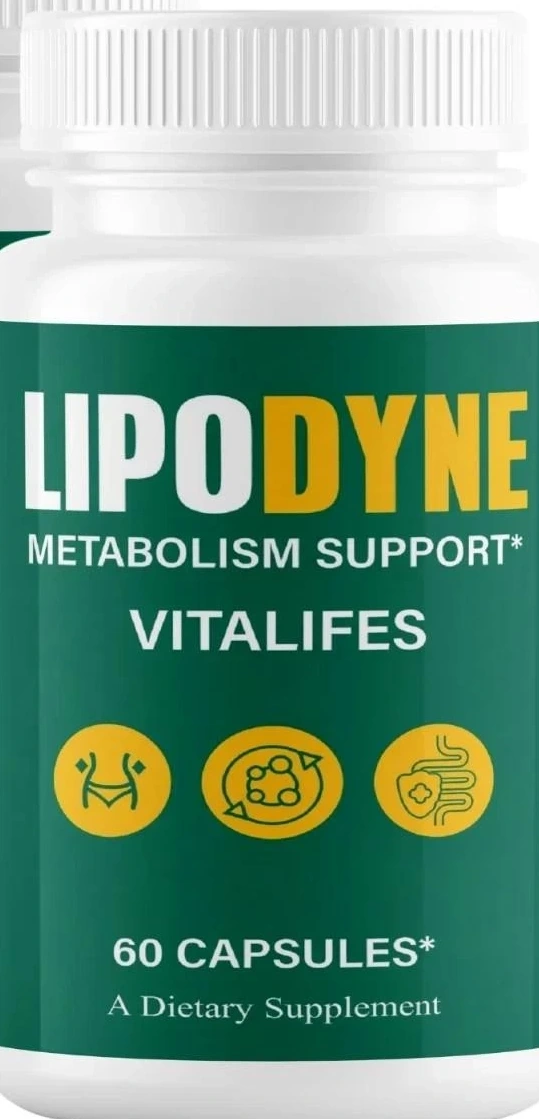
Every LipoDyne row, with the trial dose beside it
Six actives, every amount printed, and the amount each published trial used set against it. Five of the six sit below their research; one matches exactly.
One, three and six-bottle packs · price at checkout · money-back guarantee as printed on the listing
Order LipoDyne On The Official WebsiteOne capsule a day · 60 per bottle · lot LIP-26/LI-7268
What this row is probably doing
At 50 mg of unstandardised extract, the honest reading is that the cayenne row is more likely making a contribution to the formula’s identity than to its arithmetic.
Cayenne belongs on a metabolism panel in the sense that it is one of the ingredients with genuine thermogenic evidence behind it. Whether this particular 50 mg clears the published threshold is unknowable from the outside, and a reader is entitled to notice that.
It is also worth saying what the row is not: it is not a filler, it is not inert, and it is not there in an amount that could cause a problem. Cayenne at these weights is a culinary quantity, and the tolerability questions in this area concern much larger amounts taken on an empty stomach.
What the cayenne row is not being accused of
- It is not being called an under-dose, because under-dosing cannot be established without the percentage either. Unknowable and too small are different findings.
- It is not being singled out. Four other rows on this panel carry the same gap, and the same criticism applies to each of them.
- It is not unusual for the category. Most cayenne rows on most metabolism labels are printed exactly this way.
- It is not a safety issue. The amount is small, the ingredient is food, and the caution worth reading on this bottle concerns the caffeine and the black pepper rows instead.
Three questions for any cayenne row
- Is a capsaicinoid percentage printed? If it is, multiply and compare against 2 mg. If it is not, the row cannot be evaluated and you should treat it as unmeasured rather than as absent.
- Is the figure per serving or per capsule? On a two-capsule serving the panel figure is already the daily amount. On a one-capsule serving, as here, the two are the same.
- What is the rest of the panel doing? Capsaicinoids are one of several thermogenic routes, and on a panel carrying caffeine the caffeine is almost certainly the row a buyer will actually notice.
That third question is the one that puts this row in proportion. On this bottle the cayenne sits beside 100 mg of caffeine anhydrous, which is an exact, checkable, fast-acting dose of a compound with far more evidence behind it.
Anyone judging this capsule in the first week is judging the caffeine. The cayenne row, whatever its capsaicinoid content turns out to be, operates at a scale nobody feels.
References
- Irandoost P, Lotfi Yagin N, Namazi N, et al. The effect of capsaicinoids or capsinoids in red pepper on thermogenesis in healthy adults: a systematic review and meta-analysis. Phytother Res. 2021;35(3):1358-1377. PMID 33063385. https://pubmed.ncbi.nlm.nih.gov/33063385/
- Whiting S, Derbyshire EJ, Tiwari B. Could capsaicinoids help to support weight management? A systematic review and meta-analysis of energy intake data. Appetite. 2014;73:183-8. PMID 24246368. https://pubmed.ncbi.nlm.nih.gov/24246368/
- Inoue N, Matsunaga Y, Satoh H, et al. Enhanced energy expenditure and fat oxidation in humans with high BMI scores by the ingestion of novel and non-pungent capsaicin analogues (capsinoids). Biosci Biotechnol Biochem. 2007;71(2):380-9. PMID 17284861. https://pubmed.ncbi.nlm.nih.gov/17284861/
- Whiting S, Derbyshire E, Tiwari BK. Capsaicinoids and capsinoids: a potential role for weight management? A systematic review of the evidence. Appetite. 2012;59(2):341-8. PMID 22634197. https://pubmed.ncbi.nlm.nih.gov/22634197/
- Zsiboras C, Matics R, Hegyi P, et al. Capsaicin and capsiate could be appropriate agents for treatment of obesity: a meta-analysis of human studies. Crit Rev Food Sci Nutr. 2018;58(9):1419-1427. PMID 28001433. https://pubmed.ncbi.nlm.nih.gov/28001433/